Does Merino Wool Stretch? Facts and Myths
Merino wool is a natural material with many advantages and, in our opinion, fewer disadvantages. One of the most frequently asked questions is: does merino wool stretch? The answer is yes, but that does not mean that a sweater will lose its shape and change size after just a few wears.
One of the natural characteristics of wool is its elasticity. Its fibres can bend, stretch and return to their original shape. This is why merino wool is comfortable to wear and works well in both everyday clothing and sportswear.
The problem arises when we confuse the natural elasticity of the material with permanent stretching. Hanging a wet sweater on a hanger, using an overly intensive spin cycle or storing it incorrectly can lead to deformation of the knit. Merino wool itself, however, is not a material that easily loses its shape under normal use.
So where does its stretch come from? Can washing change the size of a garment? And what can you do to make sure your wool clothing lasts for a long time and retains its unique properties? Wondering whether merino wool is right for you? Stay with us and find out in our article.
How does merino behave when worn?
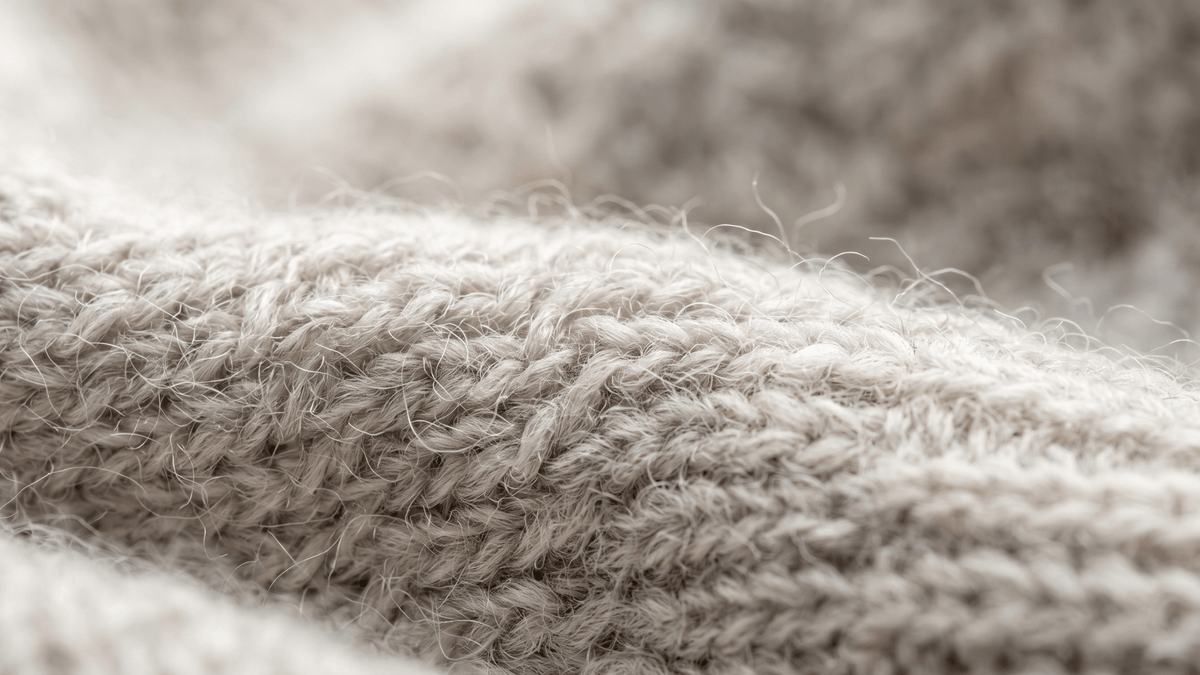
Merino wool fibres are naturally highly elastic. This is due, among other things, to their structure and characteristic crimp. The fibre behaves somewhat like a spring – it can deform under movement and then return to its original shape.

It is this natural elasticity that allows merino to adapt well to the shape of the body. This does not mean, however, that the garment can stretch indefinitely. Fibre elasticity has its limits, and the behaviour of a finished knit also depends on the type of yarn, how it is made, the knit structure and the construction of the material.
So the answer to the question does merino wool stretch is: it can stretch, but under normal conditions it should recover its original shape.
This property is particularly important in clothing worn during physical activity. A T-shirt, pair of leggings or socks made from a suitably designed knit can move with the body instead of restricting movement. It is no coincidence that merino is widely used in sportswear and outdoor clothing.
During everyday wear, the material does not lose its shape, but it may temporarily change shape in areas that are subjected to the most stress. Sleeves may become slightly longer, while the areas around the elbows or knees may become more noticeable due to repeated bending. After resting and being properly laid out, the knit will usually return to its original shape.
Woolmark even recommends allowing wool clothing to rest for around 24 hours before wearing it again. This gives the fibres time to naturally recover and return to their original shape.
It is one of those qualities that we only truly appreciate over time. Good wool clothing does not have to look exactly the same after every wear, but when properly cared for, it should not lose its size or shape.
Does washing affect stretching?
Washing wool can affect the way stretching occurs. It is important, however, to distinguish the natural elasticity of the fibre from deformation of the material.
Proper washing of wool should not cause merino wool to stretch permanently. Incorrect care is a much greater concern. Excessive heat, intensive friction or strong spinning can lead to felting and changes in the dimensions of the knit.
If you are wondering how to wash merino wool, start with the care label. Not all products have the same requirements. Some can be machine washed on an appropriate programme, while others require hand washing. Always use gentle detergents suitable for wool fibres. Fabric softener is not necessary. As a general rule, it is best to use water no warmer than 30°C.
When hand washing, remember not to rub or wring the material. It is also best to avoid sudden changes in water temperature. If the manufacturer recommends washing at a low temperature, follow those instructions.
For many merino products, a gentle washing-machine programme can work well, but it should always be used according to the manufacturer's recommendations. There is no need to assume that every wool garment has to be hand washed.
It is also worth remembering that merino wool does not need frequent washing. Its moisture- and odour-management properties mean that a garment can often simply be aired out. This does not mean, of course, that wool clothing never needs washing. If there is a stain or the material is visibly dirty, it should be washed according to the care instructions.
The fact that merino wool has become wet, especially in cold water, is much less of a concern. The main issue is how the garment is handled throughout the washing and drying process.
How to prevent deformation and how to wash merino wool?
If you want merino wool to retain its size and shape for as long as possible, you can make the biggest difference during drying and storage.

The most important thing is not to hang wet knitwear. Water increases its weight, and the material can start stretching significantly under its own weight. Woolmark recommends drying sweaters and other knitwear flat, away from direct sunlight and sources of heat such as radiators or even campfires.
After washing, gently press out excess water instead of wringing the garment. You can also gently squeeze the material using a large, absorbent towel. Then lay it flat and reshape it to its original form.
This is particularly important for larger sweaters, cardigans and long knitwear. A heavy, wet garment hanging on a hanger can gradually become longer and stretch under its own weight.
Can anything be done if a garment has already stretched slightly? Sometimes another wash according to the care instructions, followed by properly shaping the material while drying, is enough. However, do not try to “shrink” wool yourself using hot water. This can result not only in a change in size but also in felting and a loss of the wool's properties.
It is also worth remembering ironing. Merino wool is relatively resistant to creasing and often does not require ironing. If the manufacturer allows ironing, use settings intended for wool and preferably use steam.
And what about pilling? This is a separate phenomenon. If merino pills in areas exposed to friction, it does not mean that the fibres have lost their elasticity. Pilling is caused by mechanical friction on the surface of the material and is a natural occurrence. It is worth using a wool comb or a fabric shaver specifically designed for removing pills.
Does merino return to its original shape?
In most cases, yes, merino wool returns to its original shape after being stretched. This is one of the key properties that distinguishes merino wool from many other materials.

The structure of the fibre allows it to stretch and return to its previous shape. Woolmark describes wool fibres as naturally elastic, while IWTO indicates that wool can stretch by up to around 30% of its original length and return to it thanks to its structure.
However, this figure should not be directly applied to a finished sweater, T-shirt or pair of leggings. A material is more than an individual fibre. Its stretchability is also affected by the yarn, knitting method, knit structure, fabric weight and any additional fibres present in the finished knit or fabric.
That is why there is no single answer to the question how much does merino wool stretch. The fibre itself has a high capacity for stretching and recovering its shape, but the behaviour of a finished garment depends on its construction.
If the sleeves of a sweater are temporarily slightly longer after wearing it, this does not necessarily indicate a problem. After resting, the material may recover its original shape.
The same applies to other products. Socks, hats and lightweight base layers may shift and stretch slightly while being worn. Their purpose is not to remain completely rigid, but to adapt to the body, especially when they are worn as a first layer.
This is precisely why natural stretchability is an advantage of wool rather than a disadvantage. Despite its softness, merino wool is more durable than many other materials, partly thanks to the elasticity of its fibres.
So, can you deliberately stretch merino wool? Technically, the fibres can be stretched, but this is not a method worth using on a finished garment. Trying to force-stretch a sweater can result in permanent deformation of the knit. If a product is too small, it is better to consider professional alterations than to experiment with hot water or mechanically stretching the garment.
How to store merino clothing?
The way you store your clothes matters more than you might think. If you want merino wool to retain its size and shape for a long time, knitwear is best stored folded.
This applies particularly to sweaters, cardigans and other heavier garments. Hanging them for long periods can cause the shoulders and the entire construction to stretch under the weight of the material. Woolmark recommends folding knitwear and storing it in drawers or on shelves.
Before putting a garment away, make sure it is clean and completely dry. Do not store a damp garment in a closed wardrobe. It is better to let it dry completely first in a well-ventilated place.
For seasonal clothing, it is also worth protecting it against moths. Wool is a natural material that can be an attractive food source for them. IWTO recommends storing clean products and using suitable natural insect repellents.
So, is merino wool stretchy? Yes. And that is precisely why it works so well in clothing designed to move with the body. Its natural elasticity allows freedom of movement, while the fibres are able to return to their previous shape.
At the same time, it is not indestructible. Although merino wool is elastic and durable, improper washing, drying or storage can lead to deformation. So instead of asking only does merino wool stretch, it is worth remembering the second part of the answer: when properly cared for, merino wool can retain its shape very well for a long time.
It is this combination of softness, elasticity, durability and comfort that makes it such a versatile material, not only for active people but also for everyday wardrobes. It does not require special treatment at every step. It simply needs a few basic care rules and a little attention.
Sources
- The Woolmark Company, What is the Wool Fibre? – information on the properties of wool fibres.
- The Woolmark Company, Care for Wool – guidelines for caring for, drying and storing wool.
- The Woolmark Company, How to dry a wool sweater – information on drying knitwear.
- International Wool Textile Organisation, Wool Characteristics & Performance – information on the natural elasticity and stretchability of wool fibres.
- International Wool Textile Organisation, Wool Care – guidelines for caring for and storing wool products.